
Flexible packaging appears across almost every food and consumer category. It can take the form of a stand-up pouch, an individual wrapper, a flow pack or a metallized film around the product. These formats may look simple in a flat artwork file, but they are visually complex once they become objects.
Unlike a rigid box, a flexible pack changes shape when it receives volume. It folds around seals, creates small areas of tension and reacts to light according to its film, finish and structure. The artwork can be correct and the final image can still feel artificial if the volume, folds or reflections are not convincing.
That is where 3D packaging rendering becomes useful. It lets teams see how the design behaves as a real object: how the brand appears across a curve, where a finish catches the light and which details remain legible from different angles.
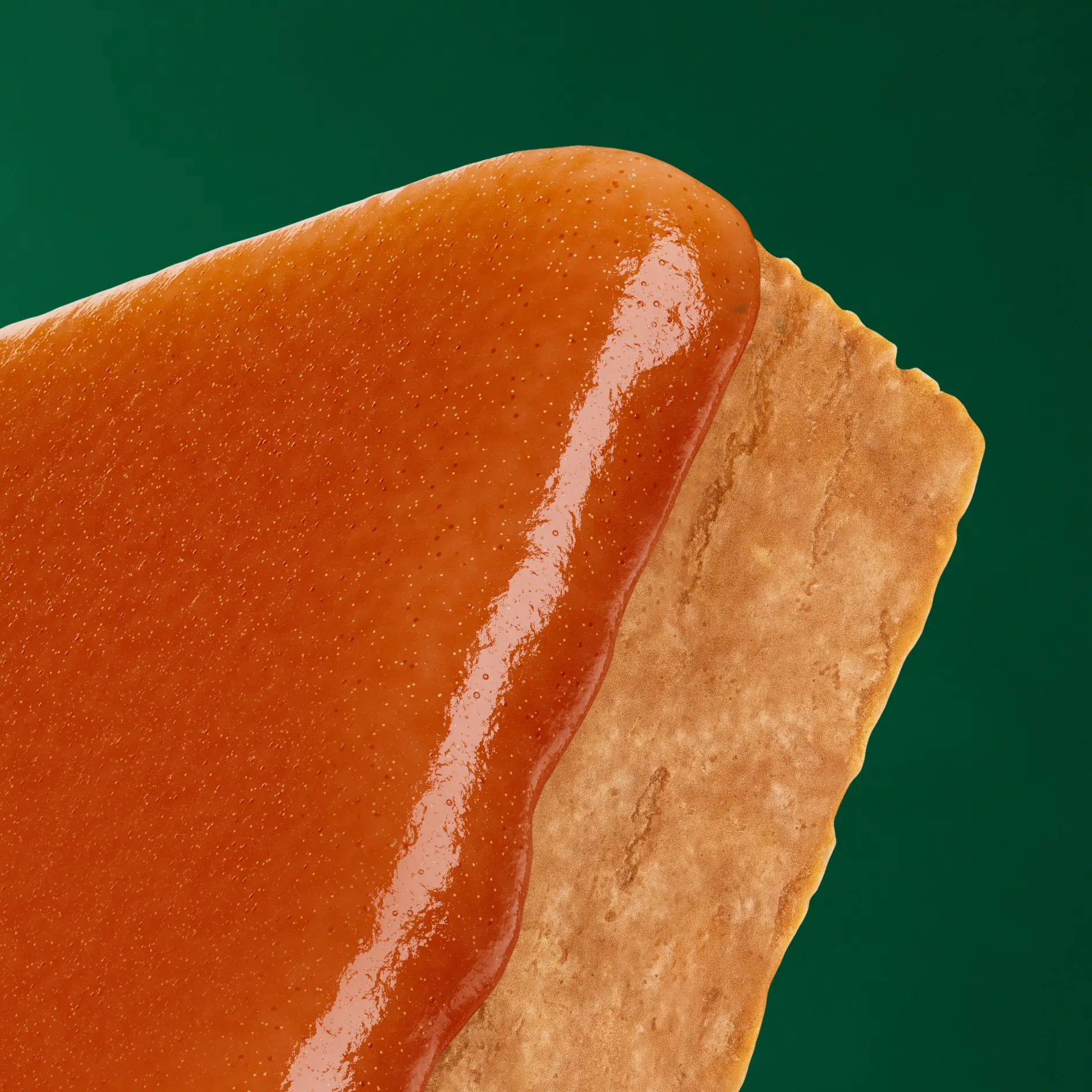
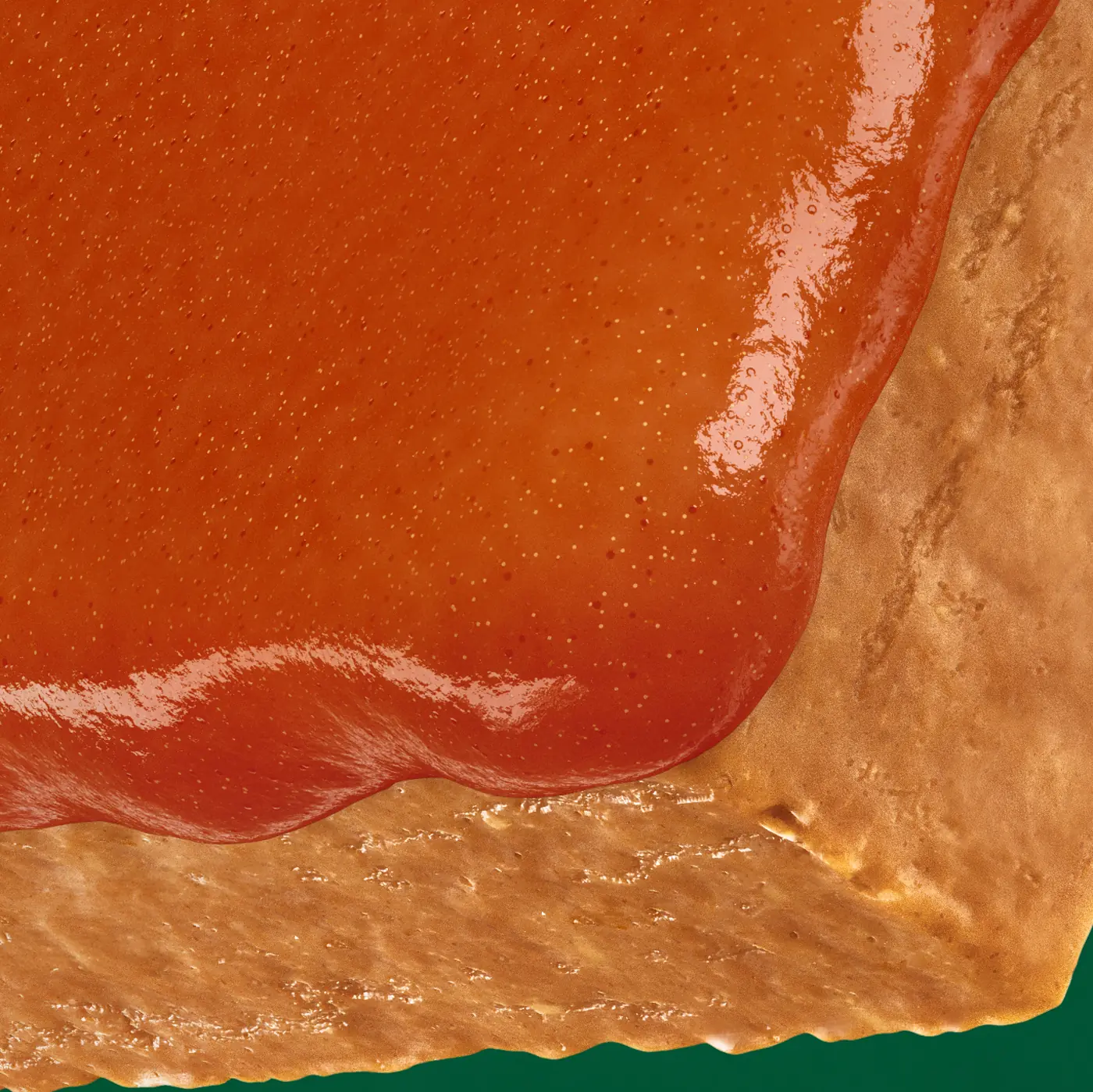
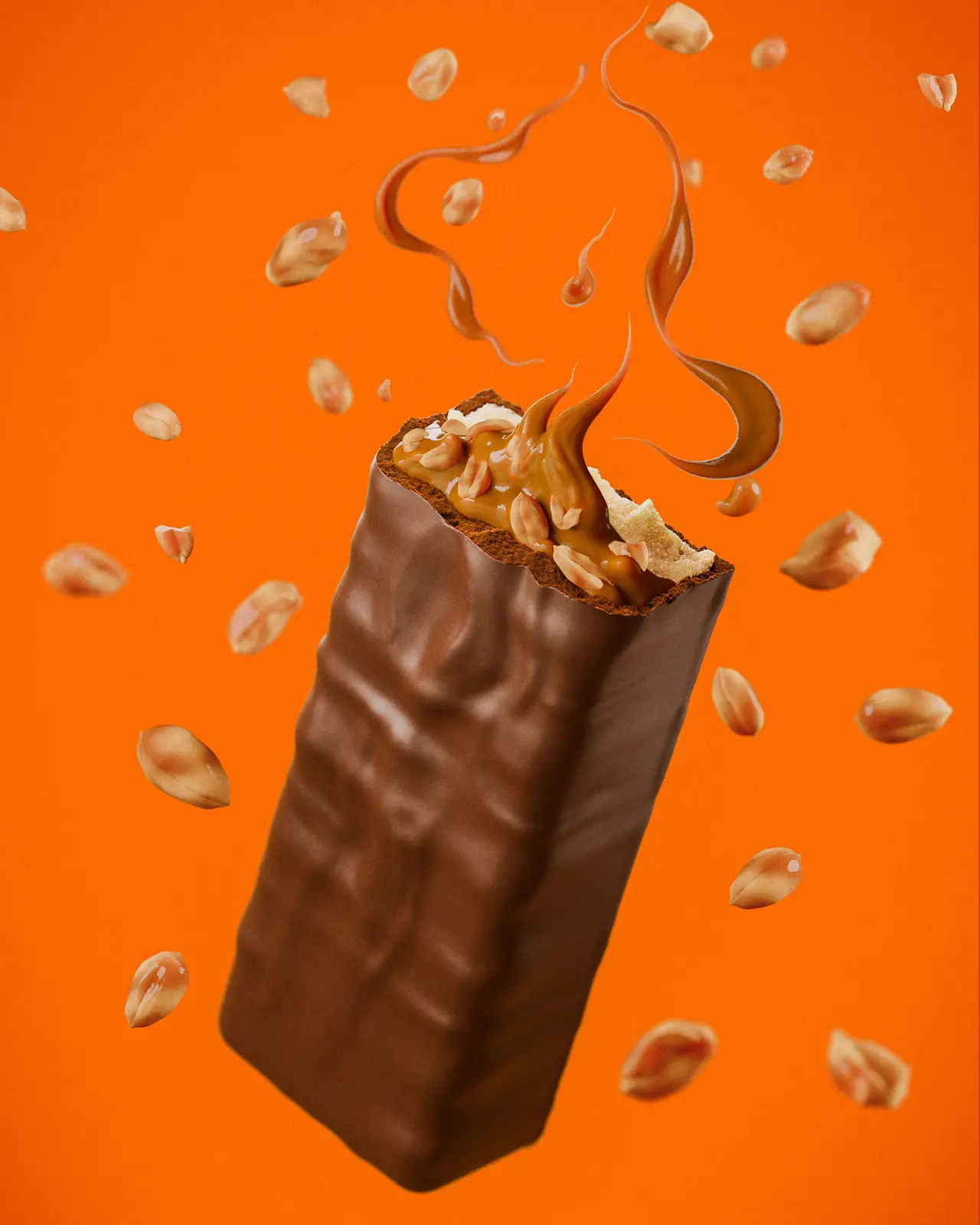
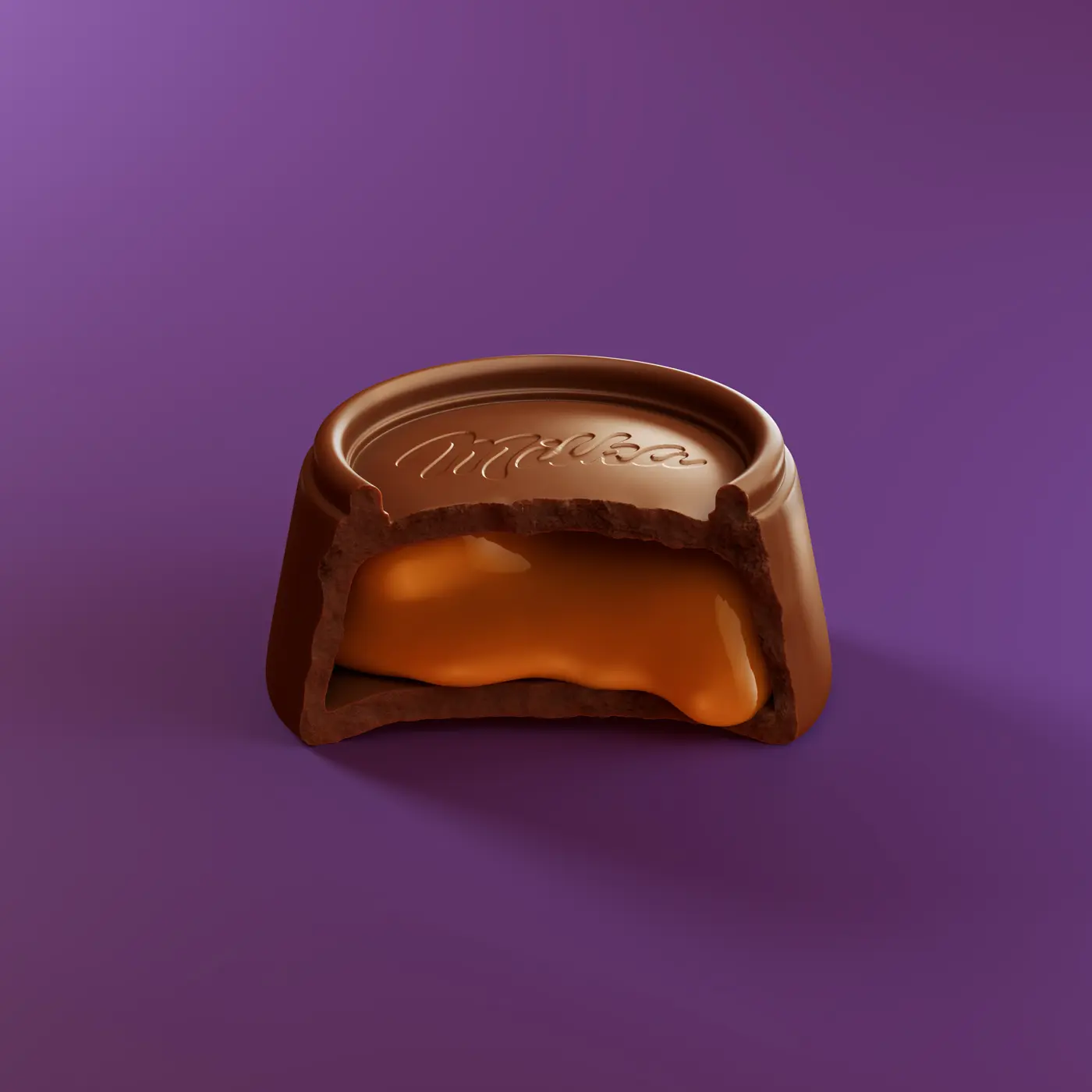
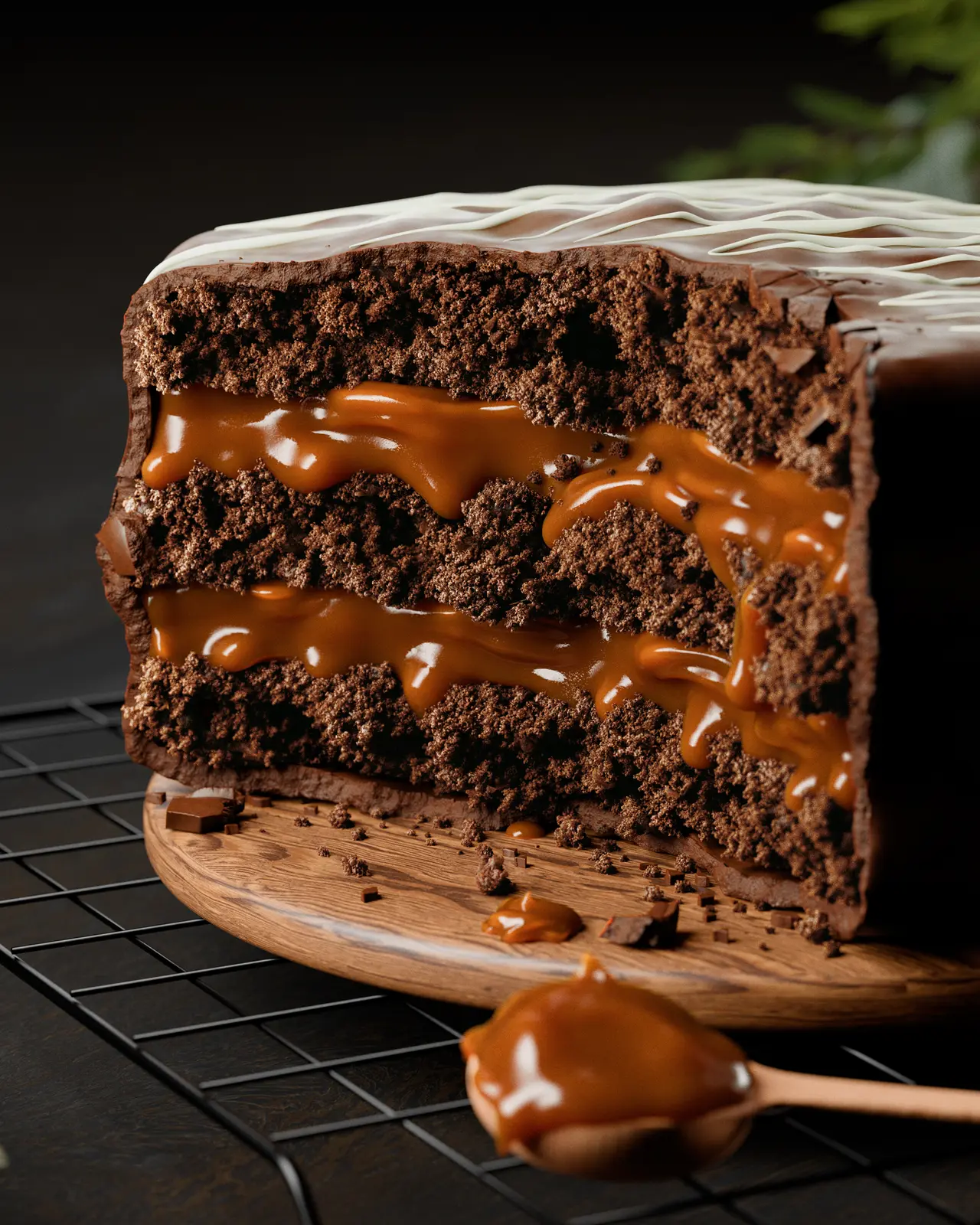
The visual references in this article come from selected GS Creative 3D product and material studies. They illustrate how form, surface, light and product logic can be controlled in CGI; they are not presented as finished flexible-packaging case studies.
Explore more product work in the GS Creative 3D portfolio.
Why flat artwork does not show the whole package
A two-dimensional artwork file can establish colours, typography, claims and hierarchy. It is essential for developing the design, but it cannot reveal everything that happens when the packaging gains volume.
On a pouch, the front may lean slightly, the bottom may form a base, a gusset may create a side plane and the top may be interrupted by a zipper or seal. On a wrapper, the artwork follows a surface that rolls around the product and ends in folds or crimped seals. With transparent film, the amount of transparency changes how colours, shadows and the product behind it are perceived.
These relationships directly affect how the pack is understood. A logo can appear larger or smaller depending on curvature. A colour field can gain contrast under a gloss finish. An important claim can sit too close to a fold or disappear when the pack is viewed from the side.
CGI helps answer these questions visually. Instead of evaluating only the opened artwork, the team can review the package in the form in which a customer will actually see it.
For the decisions that should be made before production, read What CPG Brands Need to Prepare Before Starting a 3D Product Visualization Project.
Pouches: volume, base and shelf presence
Pouches offer useful format flexibility, but they also require attention to elements that do not appear in a flat layout. Product volume, the amount of air, gusset width, zipper position and seal design all change the final silhouette.
A 3D visualization can show whether a pouch feels full, empty, rigid or excessively crumpled. It can also test how the pack behaves front-on, at a three-quarter angle or in a composition with other variants in the range.
This control is valuable because the team is deciding more than the isolated appearance of the pack. It can evaluate whether the front remains recognizable when the pouch is tilted, whether the brand has enough shelf presence, whether flavour information remains legible and whether the variants feel like one coherent family.
The goal is to make visual decisions more concrete before structural and industrial validation.
- Does the front remain recognizable when the pack is angled?
- Does the brand maintain enough presence at shelf distance?
- Does the flavour or variant area remain legible?
- Does the finish support the intended product position?
- Do the SKUs feel connected without becoming indistinguishable?
Wrappers and flow packs: packaging also communicates movement
Wrappers and flow packs have their own visual language. They wrap around the product, follow its shape and finish in seals that create folds, crimps and small variations in tension. These details may be subtle, but they are important for making the object feel real.
An excessively smooth image can make a wrapper look like a digital label applied to a solid object. Too many wrinkles or deformations can hide the artwork and make the product difficult to read. The visualization has to find a balance between structural accuracy and commercial clarity.
CGI gives the team control over fold placement, material tension and the relationship between the wrapper and the product. A clean packshot can be compared with a more tactile scene in which the wrapper is partially open, folded or in contact with the product.
Films, foils and finishes that depend on light
Not every flexible film responds to light in the same way. A matte finish spreads reflections and can feel softer. A gloss finish creates sharper highlights. Metallized foil can reflect the environment intensely, while transparent film depends on the light passing through the surface and on the product behind it.
These differences are not only technical. They help build the perceived value, flavour and position of the brand. A premium pack may need controlled reflections to show its material without losing legibility, while a metallic detail may work best as an accent rather than turning the entire surface into a mirror.
In 3D rendering, the material can be developed together with the lighting and camera. This makes it possible to assess whether the surface is communicating the intended finish or merely producing generic reflections. It also makes it easier to compare gloss, matte, transparency, lamination and metallization before choosing a final direction.
The artwork has to survive the package geometry
A useful visualization does more than prove that artwork has been applied to a pack. It helps the team check whether the artwork continues to work after application.
The design can be evaluated against curves and changes of plane, seal areas and folds, zones of stronger reflection, the distance between logo, claims and flavour information, the scale of the product in frame and the readability of front, side and three-quarter views.
The render does not replace print proofs, barrier testing or production specifications. Its contribution is to reveal visual relationships that are difficult to judge in an open artwork file or a quick mock-up.
- Curves and changes of plane
- Seal areas and folds
- Zones of stronger reflection
- Logo, claim and flavour hierarchy
- Front, side and three-quarter readability
One 3D base can generate a family of images
Brands rarely need only one image of a flexible package. The same product may appear in a packaging presentation, a sales deck, a product page, a launch campaign and several social formats.
That does not mean stretching one composition across every channel. It means building a controlled 3D base that can generate a clean package view, a close-up of the finish, a line-up of variants or a scene that connects the pack with the product inside.
When the variations come from the same model, artwork and material logic, the brand gains consistency. It also becomes simpler to update a flavour or test a new colour without rebuilding the entire project from zero.
For a broader view of reusable product assets, read How CGI Helps CPG Brands Create More Effective Product Visuals.
What teams can decide before the physical sample
The value of flexible packaging visualization is in the decisions it makes easier to discuss. Before physical production, the team can assess whether the silhouette communicates the product format, whether the logo and key elements remain legible in volume, whether the finish supports the intended position and whether folds or seals help the image or hide important information.
It can also compare SKUs as a family, review the packaging in a clean packshot and in a campaign composition, and check whether the scale relationship between product and pack feels convincing.
These questions do not remove the need for prototypes or production testing. They help the team reach those stages with a clearer visual direction and fewer ambiguities.
A simple workflow from dieline to final render
A CGI project for flexible packaging can begin with a dieline, artwork in progress, a physical prototype, reference photographs or only an early format idea. The workflow should separate what is already approved from what is still being explored.
A useful process usually includes organizing the source files, defining the structure, developing the material, studying camera and light, comparing meaningful variations and delivering the final assets for the commercial applications defined at the start.
The result is not just artwork applied to a generic model. It is a visualization that considers form, material, light and the role the image needs to play in the brand's communication.
- Organize the dieline, artwork, dimensions, references and approved versions.
- Define volume, seals, gussets, zippers, folds and the relationship with the product.
- Develop the material: matte, gloss, transparent, metallized, laminated or mixed finishes.
- Study the camera and light so the artwork remains readable and the reflections feel intentional.
- Compare angles, SKUs, openings, compositions and levels of context.
- Deliver final assets prepared for the commercial uses defined at the beginning of the project.
Flexible packaging needs to look like an object, not only artwork
Pouches, wrappers and films can look simple when they are viewed as flat files. Once they gain volume, they involve decisions about shape, tension, finish, readability and brand presence.
3D rendering helps teams see those relationships before they depend entirely on physical samples. It allows them to test materials, compare formats, adjust the visual direction and create a coherent family of images from one controlled base.
For food and consumer brands, that is the main value of CGI for flexible packaging: turning a surface that is difficult to predict into a clear, controllable visual reference that is ready for different commercial uses.
Frequently asked questions
What brands usually ask before starting.
What is flexible packaging rendering?
It is the creation of 3D images of flexible packaging such as pouches, wrappers, flow packs, films and metallized foils. The process considers the artwork as well as volume, folds, seals, material and lighting.
Which flexible packaging formats can be visualized in CGI?
Stand-up pouches, bags, individual wrappers, flow packs, transparent films, laminates, metallized foils and zipper packs can all be visualized in 3D when the information available is sufficient to define the format and intended use.
Can CGI show matte, gloss and metallized finishes?
Yes. The surface can be developed to represent different levels of gloss, transparency, metallization and lamination. The final appearance depends on the combination of material, lighting, environment and camera angle.
Does rendering replace a physical prototype?
No. CGI supports visual and communication decisions, but it does not replace industrial tests, print proofs, barrier validation, resistance testing or seal testing. It helps the team reach those stages with a clearer visual direction.
Can one 3D scene generate images for different SKUs?
Yes. When the model, artwork and materials are organized as a system, it is possible to generate flavour, size, finish, angle and composition variations while keeping the range visually consistent.
Building a stronger packaging system?
Turn flexible packaging into a controlled visual asset.
GS Creative 3D helps food and consumer brands turn products, packaging and material behaviour into focused CGI visuals for campaigns, presentations and digital channels.
Discuss a project